Community scripts › Built into Depth › FVG Lifecycle
What it shows
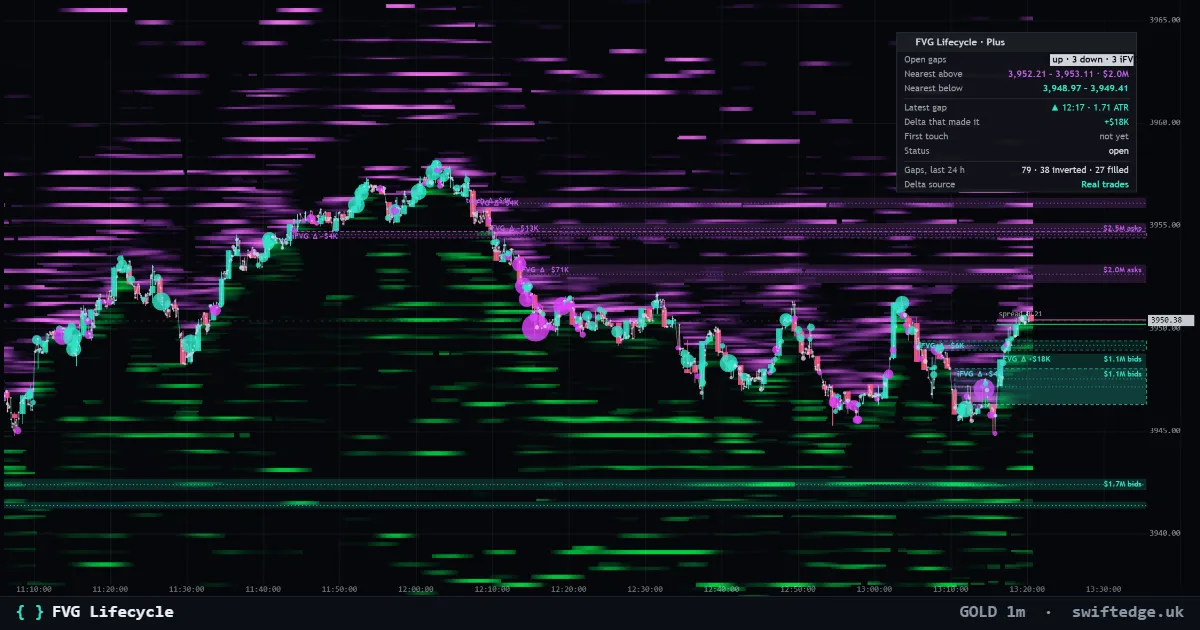
Fair value gaps from displacement through their life: shrinking as they fill, removed when filled and turned into inverted gaps when closed through, with the real delta that made each gap and the real orders inside it.
How to read it
A fair value gap is the space a strong candle leaves between the candles around it. The box shrinks as price fills it, disappears when it is filled and turns into an inverted gap when price closes through it. Each gap shows the real delta of the move that made it and the orders resting inside it.
What it can't tell you
Displacement is defined by size against ATR, so in quiet markets small gaps qualify more easily.
Settings in Depth
| Gaps | |
|---|---|
| Smallest gap (× ATR 14) | 0.15 |
| Displacement: middle body ≥ (× ATR) | 0.6 |
| Remove when filled by | a wick through |
| Gaps closed through become inverted (iFVG) | on |
| Merge gaps from the same impulse | on |
| Real data | |
| Real orders inside the gap now | on |
| Real delta that made the gap | on |
| Who traded at the first touch | on |
FAQ
What is an inverted gap?
A gap that price closed through, which then acts from the other side.
Why does a gap shrink?
Price has traded into part of it, so only the untouched part is left.
How is this different from Fair value gaps?
Fair value gaps shows open gaps; FVG Lifecycle follows each gap's whole life with real delta and orders.
More in Swiftedge Plus
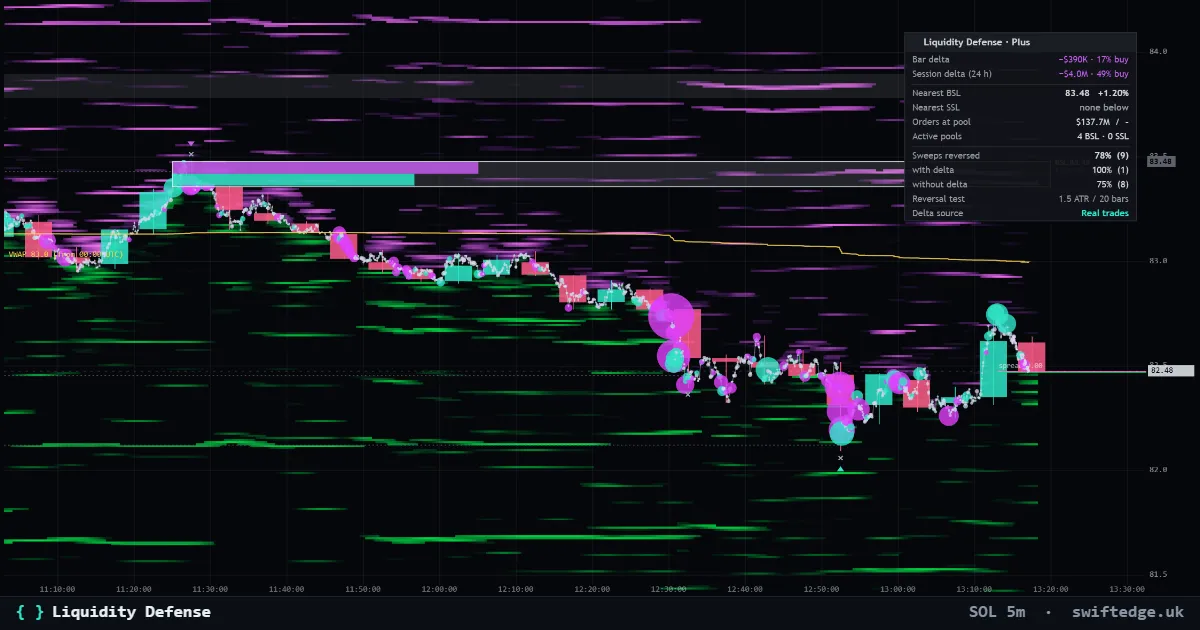
Buy-side and sell-side pools above highs and below lows with formation, defense profile and sweeps, from real trades, with the orders and liquidations at the nearest pools.
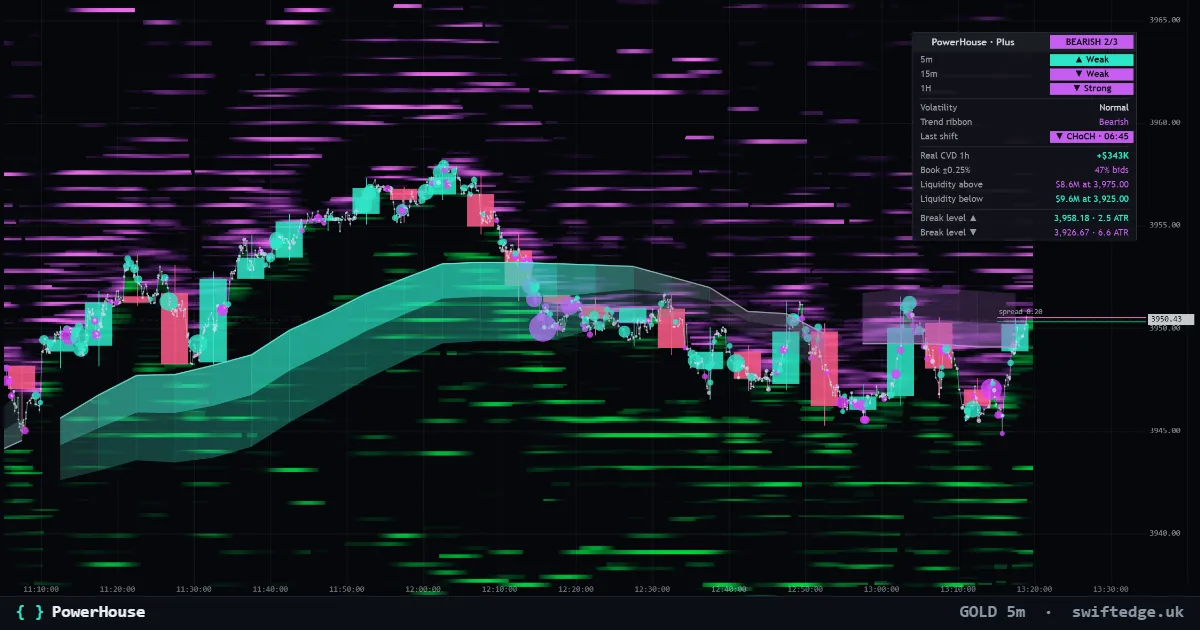
The adaptive trend ribbon, structure shifts (CHoCH and BOS) and a Trend Matrix, with the real walls and liquidation clusters above and below price.
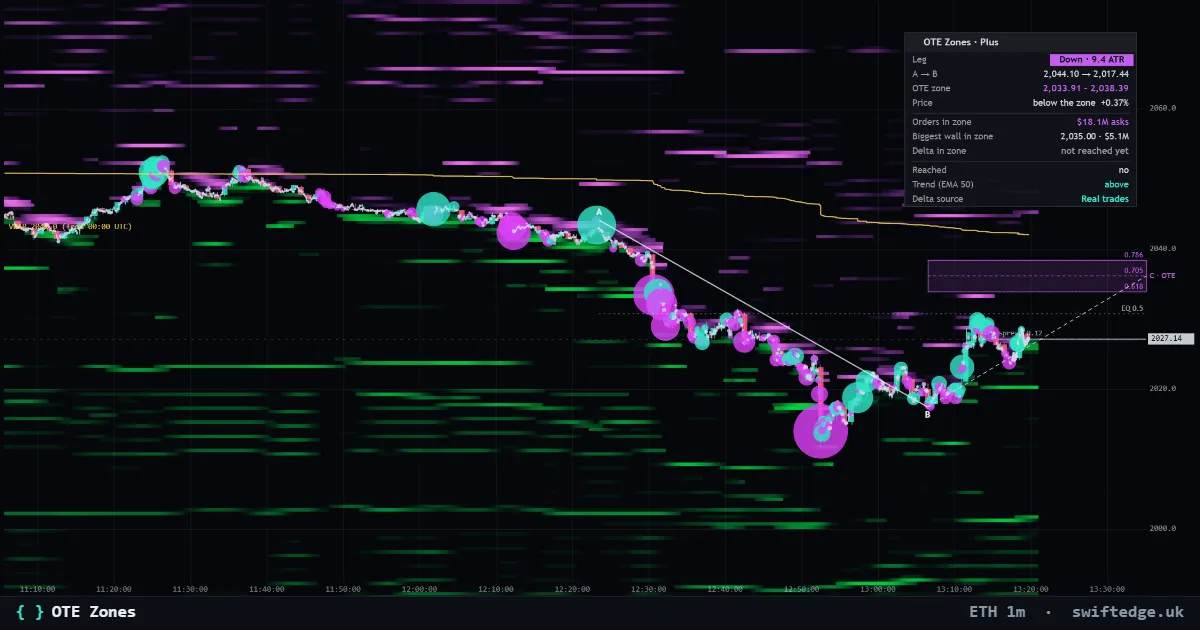
The latest impulse leg A to B and its optimal trade entry zone (0.618 to 0.786), with the real orders and liquidations inside the zone and who traded when price was in it.